The sticking point Brazil nut: the consistently hard number

The sticking point Brazil nut: the consistently hard number

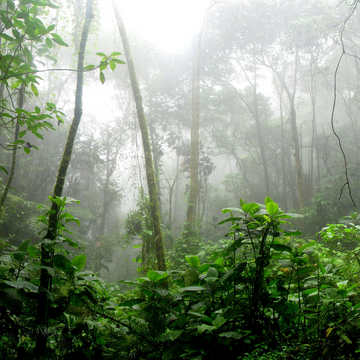
Deep in the heart of South America, between the majestic peaks of the Andes and the endless expanses of the Amazon, Bolivia hides a treasure as valuable as a precious gemstone: the Brazil nut. This little wonder begins its journey in the steaming heart of the Bolivian rainforest, where Brazil nut trees tower high into the sky in wild harmony with their surroundings.
Image of Anna Moscagiuri
Anna Moscagiuri
24.04.2024
Reading time: 5 minutes
Bäume stehen still im nebligen, dichten Regenwald, umgeben von üppigem Grün.

Why the wilderness counts

Brazil nut trees are not herd animals: they can only survive in the freedom of the wild and cannot be cultivated on typical agricultural land. Why? Because they live in very unusual relationships with animals that avoid plantations per se. For example, the flowers of the tree have a difficult folding mechanism that must be mastered in order to reach the valuable nectar. Only a few insect species are strong enough to overcome this hurdle. The trees can therefore only be pollinated by special insects. The crux of the matter is that these species would never stray into a man-made cultivation area, as they love the diversity of the jungle far too much. They prefer to look for their nectar where there are colorful flowers all over the place - so plantations with Brazil nut trees are practically impossible.

Fleeting beauty

The flowering period of the Brazil nut tree is also a chapter in itself. After the rainy season, the Brazil nut tree begins to flower for 6 - 8 weeks - but each individual flower only opens for exactly one day. If it is not pollinated during this time, it falls to the ground and the chance is gone for the time being. If an insect catches the short window of opportunity and fertilizes the flower, a so-called capsule grows in which around 18 Brazil nut kernels form. Over the course of the summer, this structure develops into a heavy fruit with impressive kernels and falls to the ground in the fall - where it is eagerly awaited.

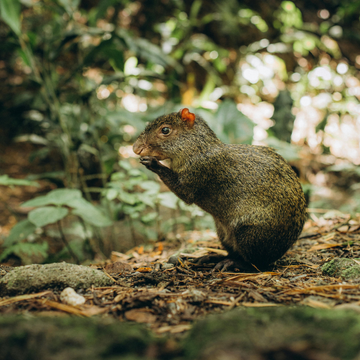
Tier sitzt essend im tropischen Wald, umgeben von Pflanzen und fallendem Laub.

Forest architects on four paws

In addition to the powerful insects, small jungle rodents are also crucial for the Brazil nut tree population: the agoutis love Brazil nuts, which is why they crack and eat them with great relish - and are the only ones who can do this. They even bury some of their treasures for a rainy day - and then can't find them again. Just like our native squirrels, they contribute to the spread of the trees. Brazil nut, power insects, aguti - this trio provides a perfect example of the subtle interplay between flora and fauna, in which humans are completely absent.

Tropical jungle giants

The Brazil nut tree, often referred to as the "dinosaur of primeval trees", is a true colossus - in many respects. When fully grown, it towers up to 40 meters high and has a crown with an impressive diameter of 50 meters. In addition to its size, the tree also impresses with its biblical age: it is not uncommon for a Brazil nut tree to live to be 400 years old. Compared to this, the amount of nuts it produces during this time seems surprisingly small. But only at first glance.

Class beats mass

If everything goes smoothly, a Brazil nut tree can produce up to 8,000 capsules during its long life, which are about the size of coconuts. This results in a quantity of just over 140,000 nuts or 700 kilograms. Calculated over a year, that is less than two kilograms of pure nut. That may not seem much for a tree of this caliber, but you have to admit: Every single Brazil nut is a powerhouse of the highest order - and its development is correspondingly strenuous.

A bundle of energy with a surprise effect

Brazil nuts are exceptionally high in vitamins and minerals - especially when it comes to selenium, they clearly outperform any other food plant. The nuts also consist mainly of high-quality proteins and valuable fatty acids. With a fat content of around 66 percent, they are in third place behind macadamias and pecans. This makes them so full of energy that locals even "misuse" them: they not only collect the nuts as food, but also use their flammable fat as candles to bring light into the darkness of the forest. The Brazil nut is therefore a central pillar of life in the Bolivian rainforest.

When the rain calls

The harvest begins at the end of the dry season and lasts for six months. When the heavy capsules are ripe, they fall to the ground with the rain, signaling the start of the collection season. The collectors are mostly locals who are very familiar with the rules of the jungle. During the harvest season, they live with their families in baraccas, small wooden huts built in the typical Amazonian style.

Machete-sharp quality

The nuts are freed from the capsules with the help of machetes and brought to collection stations in sacks. From there, they are taken to the next largest town, Riberalta. Once there, the first quality check awaits: spoiled kernels are thrown out, the rest are washed and sorted by size.

Fresh or rotten

The next step is to preserve the nuts. Here too, these special treasures are a little out of the ordinary: their quality depends on their freshness. As the nuts come unprocessed directly from the wet rainforest and have a high fat content, they need to be dried as quickly as possible. Otherwise they quickly become moldy, rancid or both.

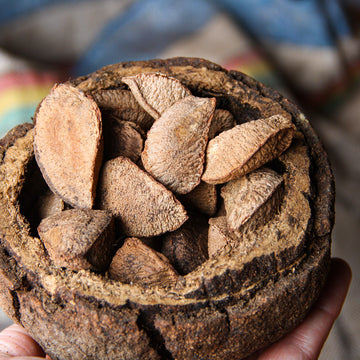
Eine Hand hält eine Schale voller Paranuss-Schalen in natürlicher Umgebung.

Steam against hardness

Brazil nuts also have an incredibly hard shell that is basically impossible to crack without tools and know-how. Our trick: the so-called steam cooking process, which works like the good old steam cooker with steam and pressure. One minute is enough to finally open it - after it has been dried again.

From tiny to large

In the final processing step, the harvesters sort the kernels according to size - the only difference in size for Brazil nuts. From small to large, a distinction is made between "Tiny", "Midget", "Small", "Medium" and "Large", whereby we at Seeberger take the two largest classes. Shortly before our sensitive nuts are packed in opaque vacuum bags and sent to us in Ulm, they are dried one last time and brought to their target moisture content so that nothing goes wrong on their journey across the pond.

Between tradition and the future

The efforts of the local people also bear fruit for life: In the regions where Brazil nuts are collected and processed, hundreds of thousands of people make a living from working around the kernel. Although it would be cheaper to crush the nuts with machines, jobs are still preserved for those who crack them by hand. This means that workers can continue to be employed, which secures their livelihoods. And even after the end of the season: after harvesting, the harvest workers find long-term, lucrative work in the processing plants.


From the jungle canopy to the snack shelf

Cultivation, pollination, development, harvesting, processing, packaging - Brazil nuts are a huge effort for insects, farmers, processing companies and us as an importer. And our quality assurance continues: we also take another look and make sure the nuts are in perfect condition before they go into your snack bags. And now we know: This delicious snack may fall from the sky, but it's a long way to gourmet bliss far away from the jungle - a journey we're all very happy to take.

Your grandiose indulgence with good knowledge

You are what you eat. So it's only logical for us to show you how and where your snacks are made. But enough talk, where are the stars? Grab your Energieration Brazil nuts from the untouched jungle of Bolivia. Guaranteed from a good home and raised with love. <3